
Stump Grinding
Finish the Job From the Ground Down
Stump grinding clears what the tree left behind.
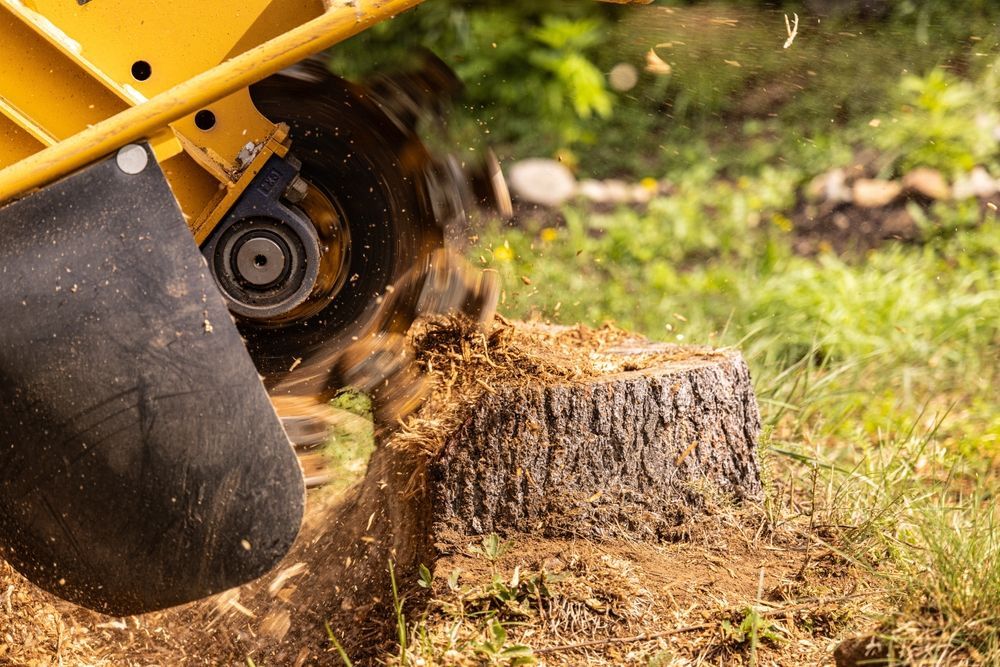
Once a tree is removed, the stump can be left in place or ground below the soil surface. Stump grinding removes the visible portion of the stump without excavating the entire root system, which remains underground and decomposes over time.
A leftover stump can interfere with mowing, landscaping, new plantings, or plans for the space, and some stumps may continue producing sprouts. Grinding gives the area a cleaner, more usable finish without digging out the tree's entire underground footprint.
What happens to the grindings depends on what was included in the estimate. They may be used to help fill the area, with excess material handled as agreed before work begins. The area may still settle as the remaining roots decompose over time and may need additional soil or leveling later, particularly if the goal is a finished lawn, driveway, patio, or another finished surface.
What Happens Below the Surface
Stump grinding removes what is visible above ground and grinds the stump below the soil surface, but it does not
remove the tree's entire root system. Those roots remain underground and decompose over time. As they break down,
the soil above them can settle and roots that weren't visible before may become noticeable.
If you plan to plant another tree in the same area, the remaining root system and what's left of the stump can make that
difficult or sometimes impractical. What you plan to do with the space afterward matters when deciding how the area
should be finished.
Answers to Frequent Stump Grinding Questions
How far below ground does stump grinding reach?
Grinding depth depends on the stump, site conditions, and how the area will be used afterward. The stump is ground below the surrounding soil level, with the planned use of the space helping determine how much depth is needed. Before grinding begins, we'll discuss what you plan to do with the area so the appropriate depth can be determined.
What happens to the wood chips after grinding?
The grindings can be used to help backfill the area or handled according to what was included in the estimate. Because
grinding can produce more material than the hole will hold, excess chips may need to be removed or placed elsewhere.
Why do some stumps sprout new growth after grinding?
The stump itself does not grow back once it has been ground, but some tree species can produce sprouts from
remaining roots. Whether that happens depends on the species and the condition of the root system.
Can stumps be ground in areas with underground utilities?
Underground utilities and other buried features need to be considered before grinding. Their location and depth can
affect how the stump is approached and how deeply the area can be ground.
Does stump grinding have to be done at the same time as tree removal?
No. Stump grinding can be included with a tree removal or scheduled later. Whether it makes sense to do it immediately
depends on how you plan to use the area afterward.