Tree Health Assessment
Identify Problems Before They Escalate
Assessing signs of decline, damage, and structural concerns before they become bigger problems
A tree doesn't have to be dead or falling apart to show that something is wrong. Changes in leaf color or density, dead branches, unusual growth, cracks, cavities, fungal growth, insect activity, bark damage, heavy vine growth, or a change in the tree's lean can all be signs that it deserves a closer look.
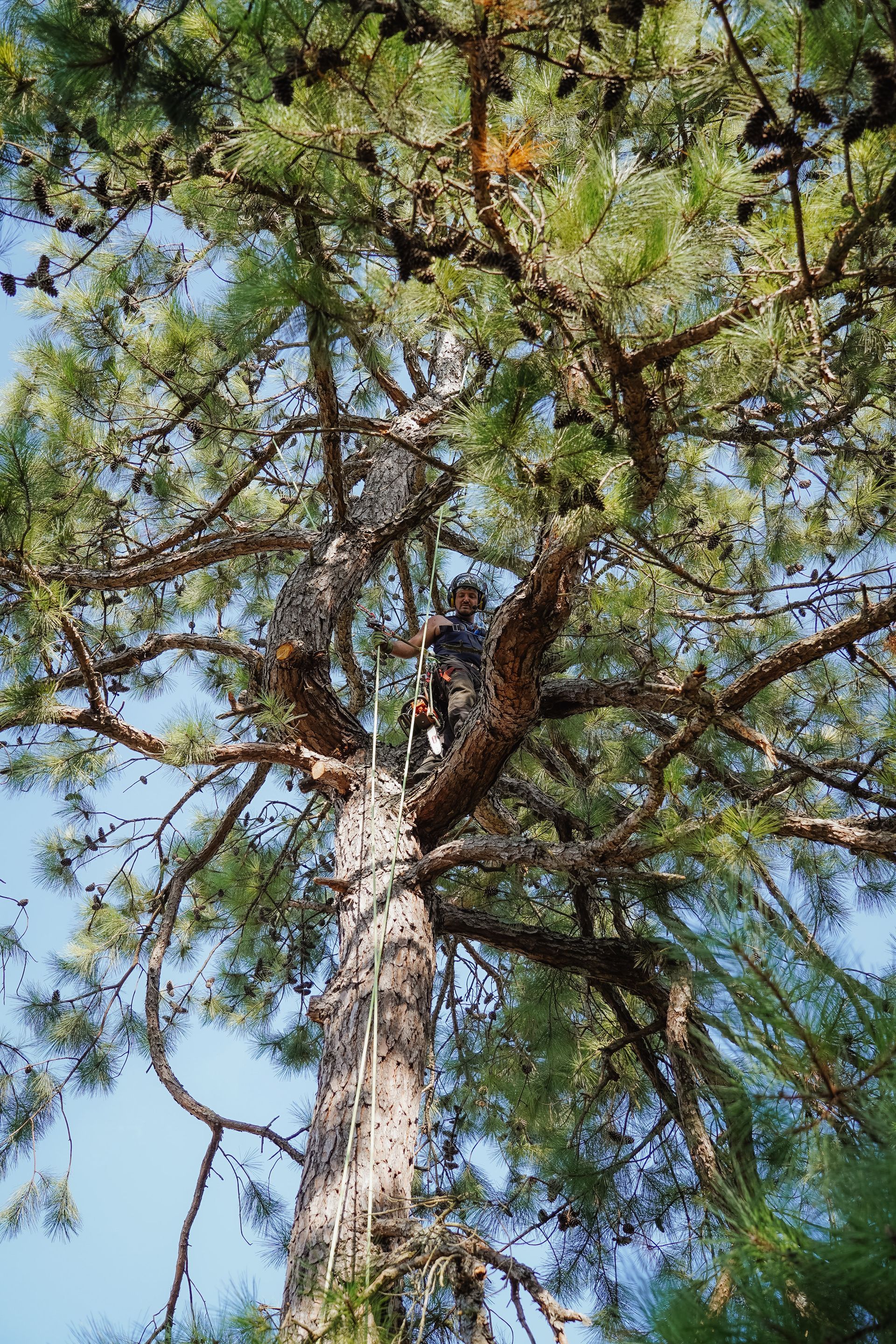
Budding Trees evaluates the tree as a whole, including the canopy, trunk, visible root area, branch structure, and surrounding property. We look for signs of damage, decay, pests, disease, and structural concerns that may help explain what you're seeing and determine whether the tree needs attention.
Not every concerning tree needs to come down. Depending on what we find, pruning may be enough to address dead, damaged, or poorly attached limbs and reduce potential hazards. In other cases, the condition of the tree may make removal the safer option.
Your Tree Is Worth a Second Look
Trees change gradually, which can make problems easy to miss when you see them every day. Paying attention to what's normal for your tree makes it easier to recognize when something has changed.
A branch that suddenly dies, leaves that emerge smaller or thinner than usual, sections of the canopy that stop filling in, new cracks or cavities, mushrooms or other fungal growth near the trunk or roots, peeling or damaged bark, and an increase in deadwood can all be reasons to take a closer look. Vines can make that harder by covering the trunk and branches and hiding defects that would otherwise be visible.
Changes after storms are especially worth noticing. A new lean, lifted or disturbed soil around the roots, newly broken limbs, or cracks where major branches meet the trunk can indicate damage even when the tree is still standing.
You don't need to know exactly what's wrong before having a tree looked at. Noticing that something has changed is often enough reason to take a closer look.
Common Questions About Tree Health Assessment
What to look for, when to be concerned, and what an assessment can tell you about your tree.
What does a tree health assessment include?
We look at the tree's overall condition, canopy, trunk, major branch unions, visible root area, and surroundings. We look
for signs such as dead or damaged limbs, cracks, cavities, decay, fungal growth, insect activity, abnormal growth, root
damage, changes in lean, and other visible structural or health concerns.
When should I get a tree health assessment instead of just watching the tree?
If you've noticed a significant change in a tree, it's worth having it looked at rather than waiting to see what happens.
Sudden leaf loss or discoloration, dead branches, fungal growth, cavities, cracks, peeling bark, insect activity, new or
worsening lean, exposed or damaged roots, and sections of the canopy dying back can all indicate a problem worth
investigating. Changes following storms, construction, excavation, or damage around the root system are also good
reasons to have the tree evaluated.
What happens after the tree health assessment is finished?
Once we've evaluated the tree, we'll explain what we found, how serious the concern appears to be, and what your
options are. Depending on the problem, that may mean pruning, treatment, continued monitoring, or removal.