Tree Removal
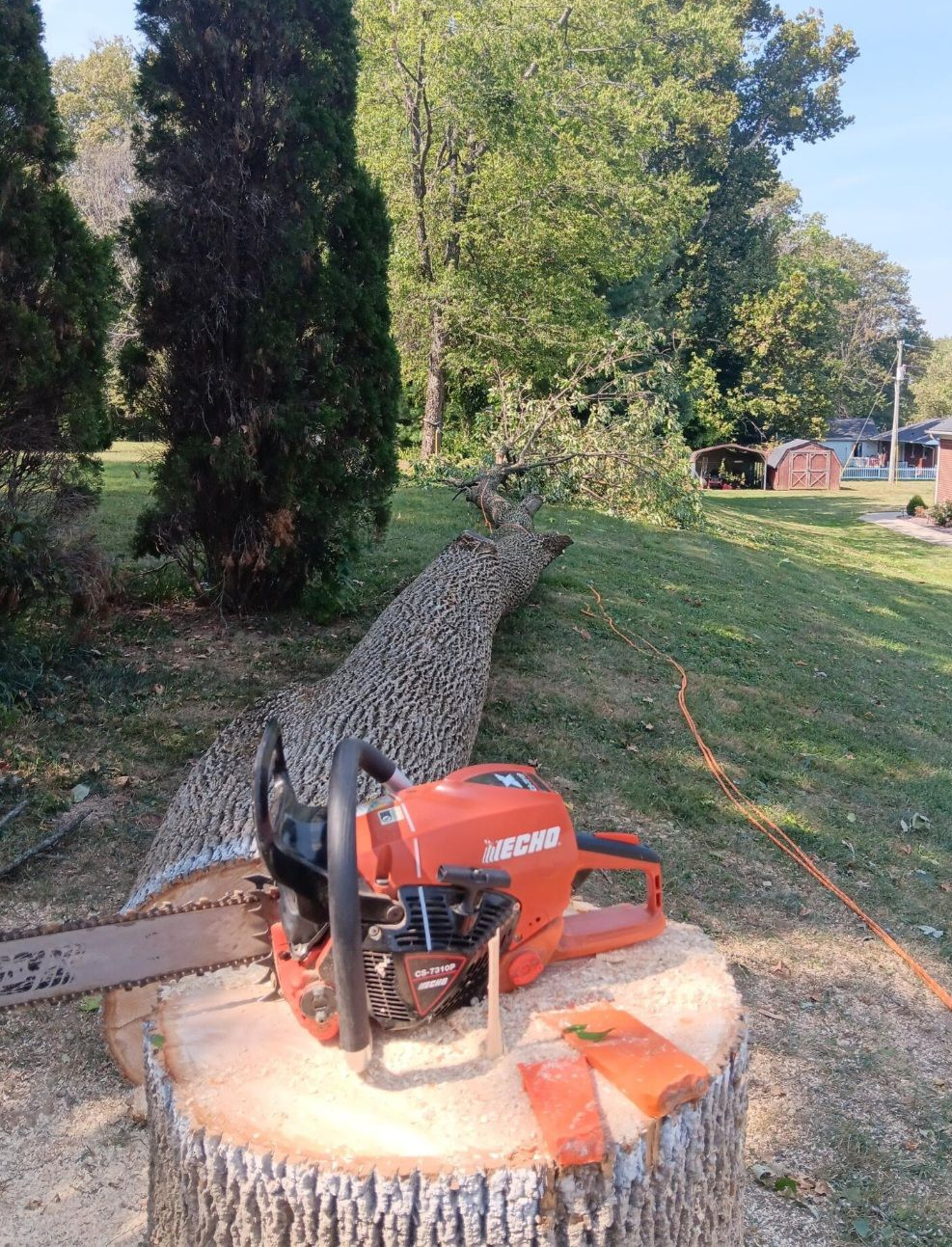
Tree Removal and Preservation of Property
Technical tree removal where there's little room for error in Henderson and the surrounding Tri-State.
Sometimes outright felling a tree is not an option. Trees growing beside homes, fences, landscaping, driveways, utility lines, or other structures often need to be dismantled piece by piece, with each section given a controlled descent.
Using rope-based climbing, we can move throughout the tree without relying on a bucket truck for access. When branches or sections of the trunk can't be safely dropped, we use rigging systems which utilize specialized equipment to control their movement and lower them safely to the ground. This allows us to dismantle trees in tight or difficult locations while reducing the risk of damage to the property below.
How a tree comes down depends on the size, shape, and health of the tree, as well as the property surrounding it. Some removals allow sections to be dropped safely, while others require extensive rigging and precision lowering from beginning to end. Before work begins, we evaluate the tree, available space, nearby structures, and potential hazards to determine how each part of the removal can be completed safely and efficiently.
Once the tree is down, branches and debris are processed and removed unless other arrangements have been made in advance. The stump remains unless stump grinding is included in the estimate, which will be established before work begins. Once the tree is removed, the changes that follow are worth planning for too.
What Changes Once the Tree Is Gone
Removing a tree changes more than the view. A mature canopy may have shaded your home, lawn, landscaping, or
other trees for years. Once it's gone, areas that previously received filtered light or shade can suddenly get hours of
direct sun. Plants accustomed to those conditions may struggle with the change or even need to be replaced, and
exposed soil can dry out much faster than it did before.
The tree's underground footprint doesn't disappear with the trunk either. Stump grinding removes the visible stump and
grinds it below the soil surface, but most of the root system remains underground and decays naturally over time. As
those roots break down, the ground above them can settle, sometimes requiring additional soil later to level the area.
If another tree is going in, putting it directly where the old one stood isn't always possible. Leftover root systems and
what's left of the stump can make planting difficult, while changes in sunlight, available growing space, and even the
reason the original tree was removed should factor into choosing a location for its replacement.
Removing a tree creates a new environment on the property. Knowing what will change ahead of time makes it much
easier to plan what comes next.
Questions Homeowners Ask Before Removal
Common questions from property owners in Henderson and the Tri-State area about tree removal, what to expect, and what happens afterward.
What size tree can be removed using rope-based climbing?
Tree size alone doesn't determine whether a tree can be removed using rope-based climbing and rigging. Large trees
can be dismantled in sections, with each piece lowered under control when it can't be safely dropped. The tree's
condition, available space, surrounding structures, and complexity of the removal determine the approach we use more
than its height or trunk diameter
When is the best time to remove a tree in Henderson?
Trees can be removed year-round, and the best timing usually depends more on the reason for removal than the season.
If a tree is dead, damaged, unstable, or posing a risk to people or property, waiting for a particular time of year may not
be appropriate. For planned removals that aren't urgent, weather, ground conditions, surrounding landscaping, and
accessibility may all factor into scheduling.
Why does tree removal cost vary so much between companies?
Tree removal pricing can vary based on the size and condition of the tree, its location, how difficult it is to access, what
surrounds it, the amount of rigging required, and how the wood and debris will be handled. Companies may also use
different equipment, crew sizes, and removal methods, all of which affect the time and cost involved. When comparing
estimates, make sure you're comparing the same scope of work, including cleanup, debris removal, and stump grinding if
requested.