Tree Pruning
Pruning With a Purpose
Thoughtful pruning for healthier, safer regrowth.
Effective pruning requires knowing what to remove, what to leave, and where to make each cut. Budding Trees provides selective pruning based on the structure and condition of each tree. Goals may include removing dead, damaged, drooping, or crossing/rubbing limbs, protecting property, creating space beneath or around the canopy, thinning dense growth to improve airflow and light penetration, or removing poorly attached limbs before they become larger problems.
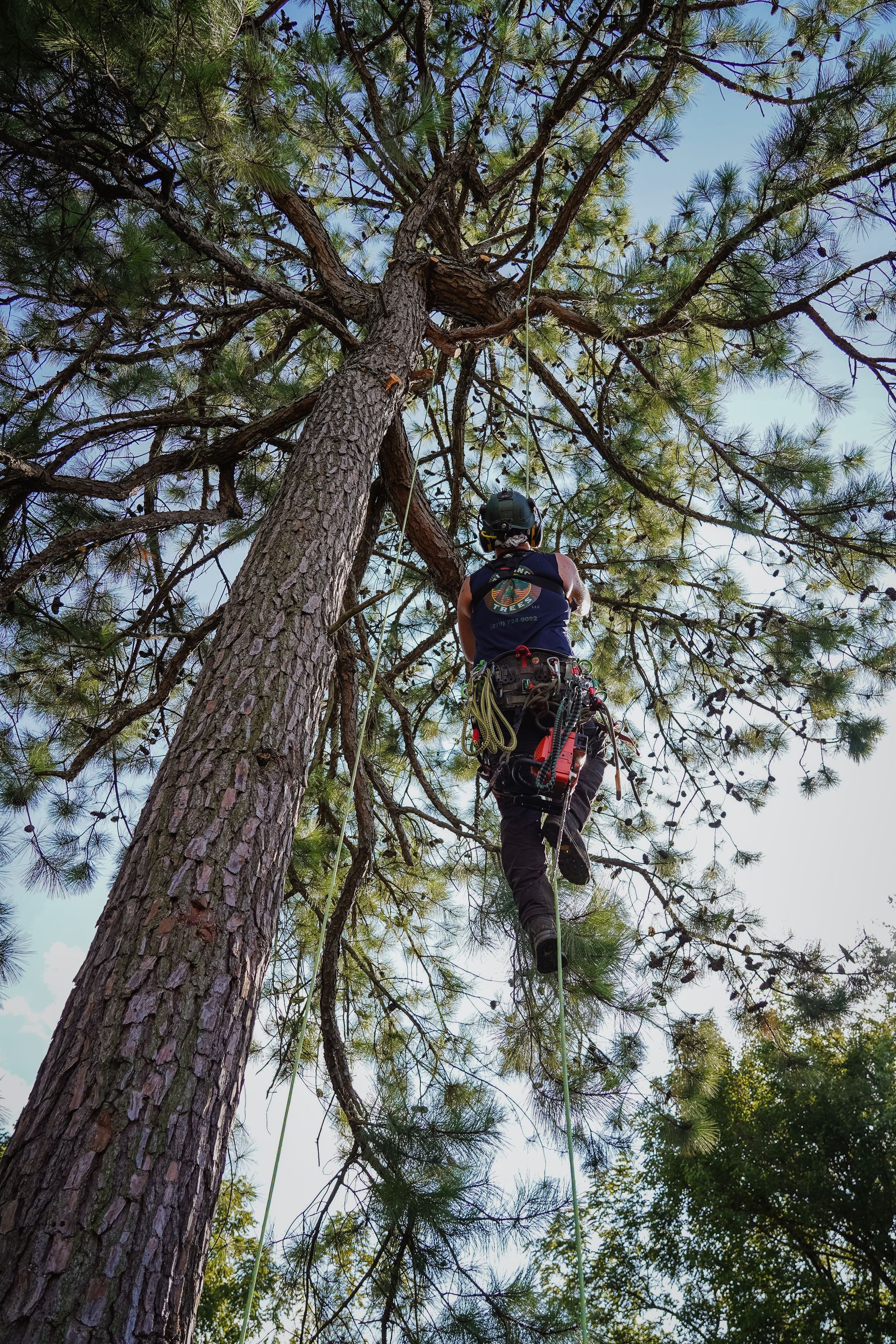
Using rope-based climbing and specialized equipment, we can move throughout the canopy and access individual branches without relying on a bucket truck. This gives us the flexibility to make targeted cuts throughout the tree while preserving its natural shape and avoiding unnecessary removal of healthy growth.
Proper pruning means knowing when to stop. Removing too much of the canopy at once leaves the tree without enough foliage to efficiently photosynthesize and produce the energy it needs. This can deplete stored energy, reduce root growth, trigger vigorous, brittle regrowth, and leave the tree more vulnerable to insects, disease, and decay.
Proper pruning cuts are made just outside the branch collar, where the limb meets the trunk and the tree is best able to seal off the wound. Cutting in the wrong place can interfere with that process, leaving an open door for rot, disease, and insect infestation. Cutting branches at arbitrary points throughout the canopy to reduce the tree's overall size is known as topping, a practice which can create many of these same problems.
Every tree is different, and so is the reason for pruning it. Before work begins, we'll discuss what you're trying to accomplish and evaluate the tree to determine an approach that addresses your concerns without taking more than necessary.
What Proper Pruning Accomplishes Over Time
Pruning goes far beyond correcting problems which already exist. When done throughout a tree's lifespan, it can help
guide how the tree develops and prevent smaller concerns from growing into much larger ones.
Young trees especially benefit from thoughtful structural pruning. Addressing competing leaders, poorly positioned
branches, and weak attachments while branches are still small can help establish a better framework as the tree
matures. Smaller pruning cuts are also easier for the tree to seal off than removing the same branches years later after
they've grown significantly larger.
As trees mature, pruning can help maintain appropriate space around homes, roofs, driveways, sidewalks, utility lines,
and other parts of the property. Managing growth before branches become oversized or begin interfering with their
surroundings can reduce the need for drastic pruning later.
What Property Owners Ask About Pruning
Common questions from property owners in Henderson and throughout the Tri-State about pruning, timing, and what to expect.
What time of year should trees be pruned in Henderson?
The best time to prune depends on the type of tree, its health, and the reason for pruning. Many trees benefit from pruning during the dormant season. Oaks are best pruned during this time, when insects that spread oak wilt are less active. Maples can also be pruned while dormant, but cuts made in late winter or early spring may release harmless sap. Summer pruning can help avoid this. Dead, broken, or hazardous branches may need attention at any time of year.
What happens to branches after they are removed?
When branches can't be safely dropped, we use rigging systems which utilize specialized equipment to control and lower them to the ground. This allows us to manage the weight and movement of larger limbs while protecting structures, landscaping, and other areas beneath the tree. Once on the ground, branches are processed and removed from the property unless other arrangements are made in advance.
How much of the canopy can be safely removed?
There isn't one percentage that's appropriate for every tree. How much can safely be removed depends on the tree's species, age, condition, and the reason for pruning. Younger, healthy trees may tolerate more pruning than mature or stressed trees, while some trees may only need a small amount removed at one time. In general, the goal is to remove only what is necessary while preserving enough living canopy for the tree to continue producing the energy it needs.
Can a tree that has been topped be corrected?
Sometimes. Correcting a topped tree is usually a gradual process and can take years. New shoots that form after topping may need to be selectively reduced or removed as the tree develops. Whether correction is practical depends on factors such as the size and location of the original cuts, the amount of decay present, and the tree's overall condition.